If you have ever stayed up late trying to read someone else's open-source repository and felt like you were drowning, this post is for you.
Most of the people you are about to meet started exactly there. Confused. Tired. Pretty sure they did not belong in a room with maintainers from Google, Apache, or the European Bioinformatics Institute. None of them had a recruiter friend at a FAANG company. None of them came from a school anyone had heard of. A few of them were the first person in their family to write a line of code.
This year, 14 acceptances came in across 13 of them, into 5 different open-source mentorship programs. We wanted to introduce you to each of them properly, because the names matter more than the headline does.
Here is the honest breakdown so nobody is left guessing:
- 9 selections into Google Summer of Code 2026.
- 1 into Linux Foundation LFX Mentorship 2026, as a mentor (not a mentee).
- 2 into Social Summer of Code 2026 (one of them, Talha, is doing GSoC and SSoC in parallel, which is why the acceptance count is 14 across 13 people).
- 1 into European Summer of Code 2026.
- 1 into GirlScript Summer of Code 2026.
The host organizations include the Apache Software Foundation (Apache Beam), NumFOCUS (the nonprofit behind NumPy, matplotlib, and most of scientific Python), EMBL-EBI in Cambridge (the team that maintains Ensembl, the genome browser most working biologists keep in a tab somewhere), FLARE at Mandiant which is part of Google Cloud, BRL-CAD, FOSSASIA, InVesalius, C2SI, the Drupal Association, PyTorch Forecasting, and the Linux Foundation.
We will get to all of them. First, a little context.
How most of these stories actually start
Pull requests get rejected. Mailing-list threads get ignored. You write a line of code that you are sure is right, and a maintainer points out, kindly or otherwise, that it is not. Some weeks pass with nothing visible to show. The repository you cloned 3 months ago still feels like it was written in a foreign language.
That is not a sign you are doing it wrong. That is the work.
What separated the 14 people below from 100 others who started at the same place was not talent, and definitely not a head start. It was that they kept showing up on Saturday mornings even when no one would have noticed if they did not.
Google Summer of Code 2026 (9 selections)
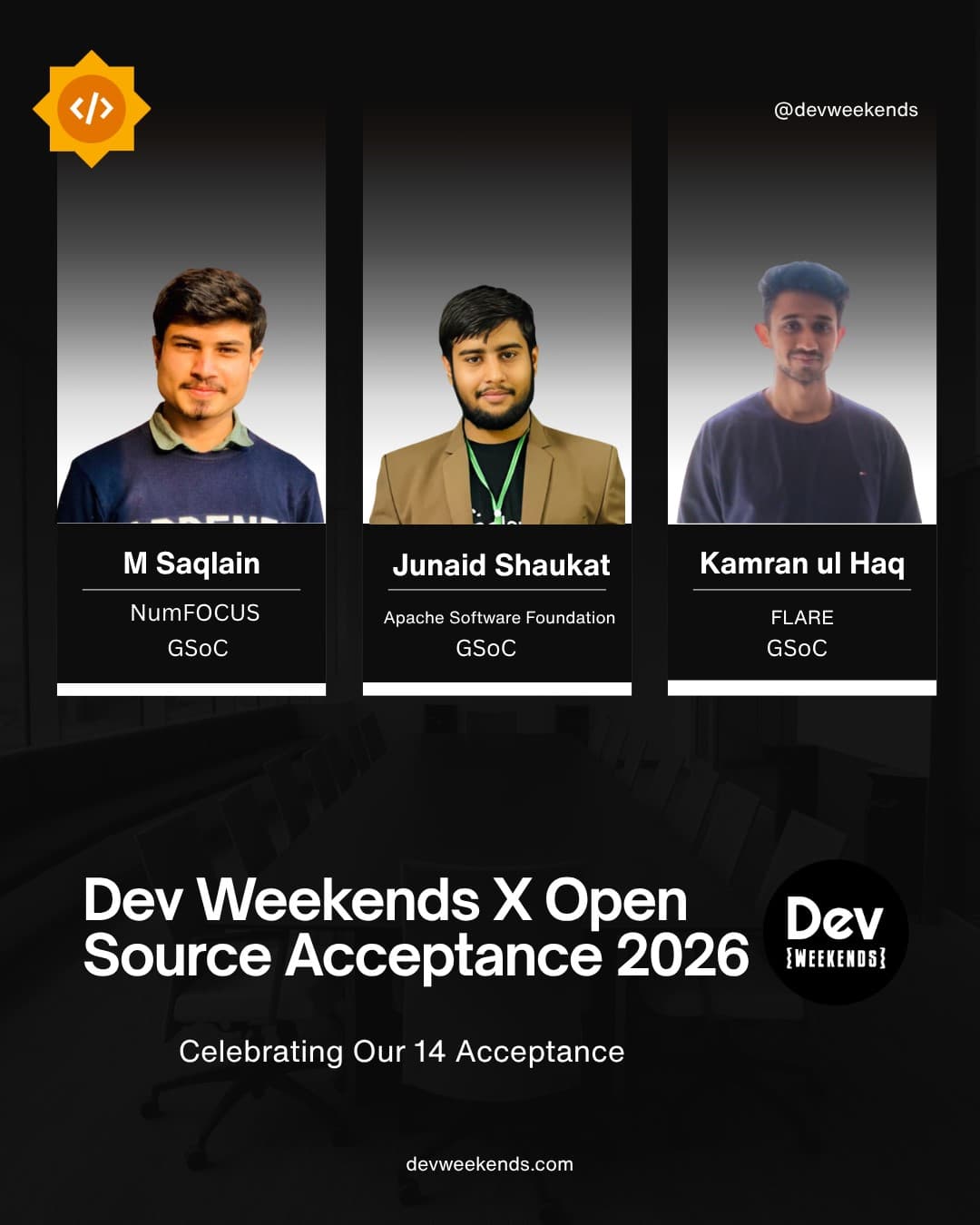
Pictured above: Muhammad Saqlain (NumFOCUS), Muhammad Junaid Shaukat (Apache Software Foundation, Apache Beam), and Kamran ul Haq (FLARE).
Muhammad Saqlain at NumFOCUS
Saqlain is contributing to a project under NumFOCUS, the nonprofit umbrella that supports much of the open-source scientific Python ecosystem (NumPy, matplotlib, PyMC, GRASS GIS, and around 24 others). If you have ever run a pip install, you have probably used software stewarded by this group. Project page.
Muhammad Junaid Shaukat at the Apache Software Foundation (Apache Beam)
Junaid is working on Apache Beam, the unified model for batch and streaming data pipelines that runs on Flink, Spark, and Google Dataflow. Worth knowing: by the time he wrote his proposal, he already had pull requests merged into the Beam TypeScript SDK on the public dev list. The proposal was a continuation of work he was already doing. That is the version of "warming up" that actually counts. Project page.
Kamran ul Haq at FLARE
Kamran is contributing to FLARE, the reverse-engineering team at Mandiant (now part of Google Cloud) that ships open-source malware analysis tooling like capa, FLOSS, GoReSym, and XRefer. His co-mentors are people who reverse nation-state malware for a living. Project page.
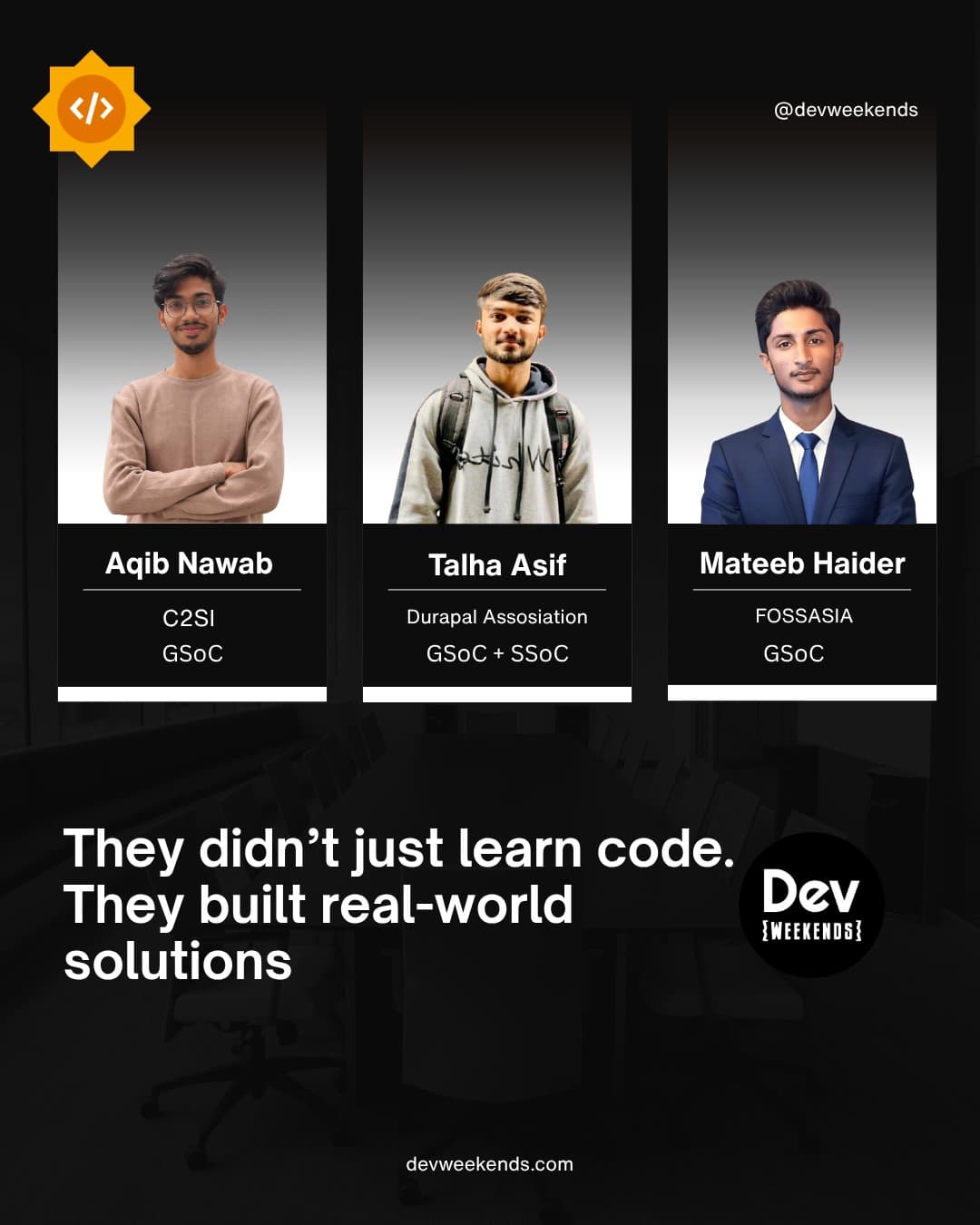
Pictured above: Aqib Nawab (C2SI), Talha Asif (Drupal Association, also Social Summer of Code 2026), and Mateeb Haider (FOSSASIA).
Aqib Nawab at C2SI
Aqib is working with C2SI, an 11-year veteran GSoC organization that runs cybersecurity, AI, and developer-tooling open-source projects. The 2026 lineup leans into LLM threat-intelligence, Web3 cameras, and agentic firewall SDKs. Project page.
Talha Asif at the Drupal Association (also SSoC 2026)
Talha is contributing to Drupal, whose 2026 ideas list leans into AI inside the Drupal CMS. He is also doing Social Summer of Code in parallel, which is a real workload to carry through one summer. Project page.
Mateeb Haider at FOSSASIA
Mateeb is shipping cross-platform support for the FOSSASIA Scrum Helper. The browser extension currently summarizes stand-up activity on GitHub. By the end of his summer, distributed teams should be able to run their daily reports across GitLab, Bitbucket, and other source-control platforms. Project page.
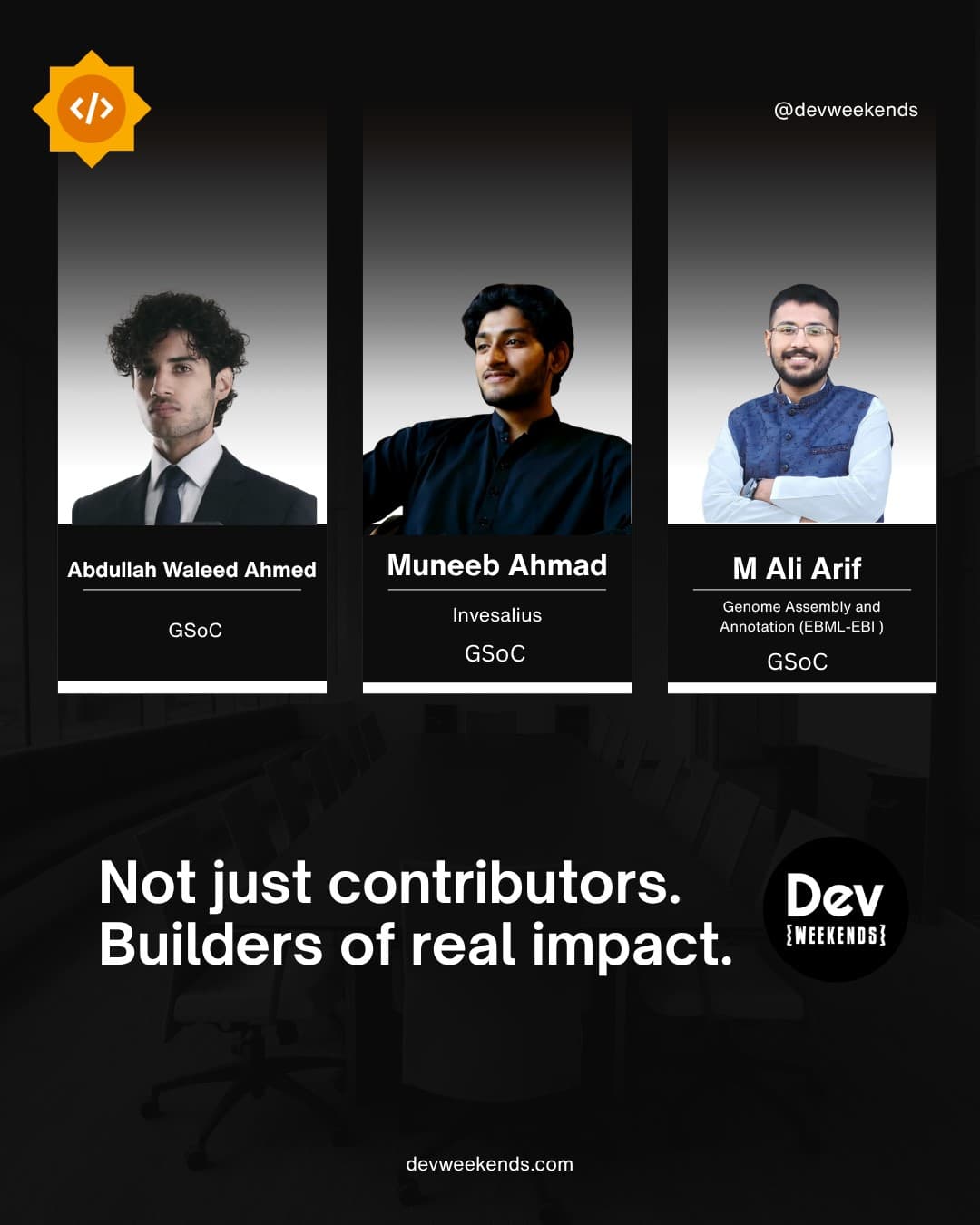
Pictured above: Abdullah Waleed Ahmed (BRL-CAD), Muneeb Ahmad (InVesalius), and Muhammad Ali Arif (EMBL-EBI, Genome Assembly and Annotation).
Abdullah Waleed Ahmed at BRL-CAD
Abdullah is contributing to BRL-CAD, the open-source solid modeling and CSG geometry system originally developed at the U.S. Army Research Laboratory. It is one of the longest-lived open-source codebases on the planet and a serious place to learn what mature C and C++ looks like in practice. Project page.
Muneeb Ahmad at InVesalius
Muneeb is contributing to InVesalius, the open-source medical imaging suite developed by Brazil's CTI Renato Archer. It turns DICOM scans into 3D surface models for clinical and research use, including neuronavigation and TMS workflows. The code he writes will be used in real hospitals. Project page.
Muhammad Ali Arif at EMBL-EBI
Ali Arif is working with EMBL-EBI's Genome Assembly and Annotation team in Cambridge, UK. They are the people behind Ensembl, the genome browser most working biologists keep in a tab somewhere. The pipelines he contributes to will be cited in research papers. Project page.
The other 4 programs (5 selections)
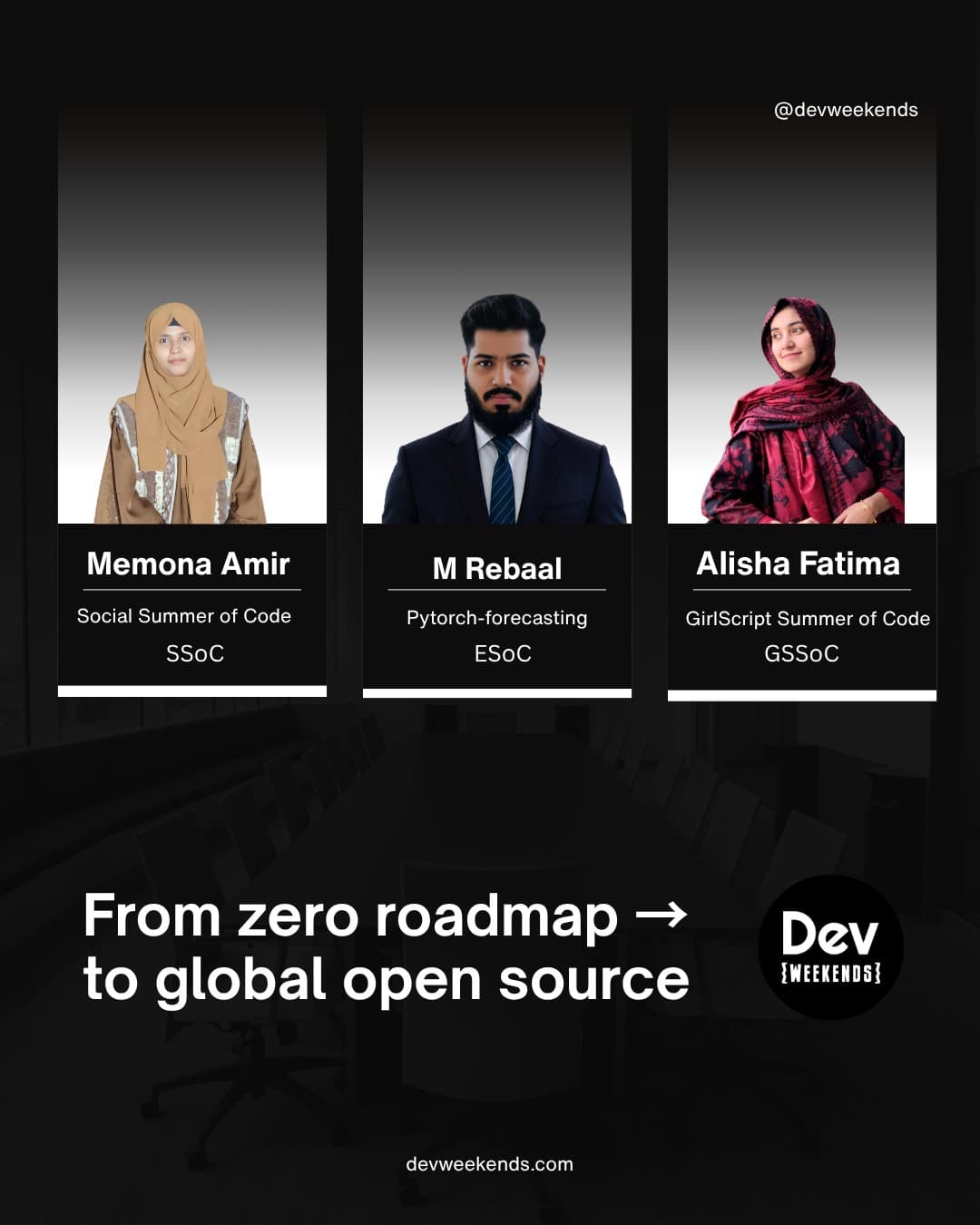
Pictured above: Memona Amir (Social Summer of Code), Muhammad Rebaal (European Summer of Code at PyTorch Forecasting), and Alisha Fatima (GirlScript Summer of Code).
Memona Amir at Social Summer of Code
Memona was selected into SSoC Season 5, the India-based program that has rallied tens of thousands of contributors across its previous editions.
Muhammad Rebaal at PyTorch Forecasting (ESoC 2026)
Rebaal is contributing to PyTorch Forecasting through the European Summer of Code. The library is maintained by the sktime community in collaboration with FBK and the GC.OS umbrella, which is the kind of place where time-series research and applied infrastructure meet.
Alisha Fatima at GirlScript Summer of Code
Alisha is contributing through GSSoC 2026, India's flagship women-in-OSS program. The 2026 edition adds a new Open Source track and a separate AI Agents track running through the summer.
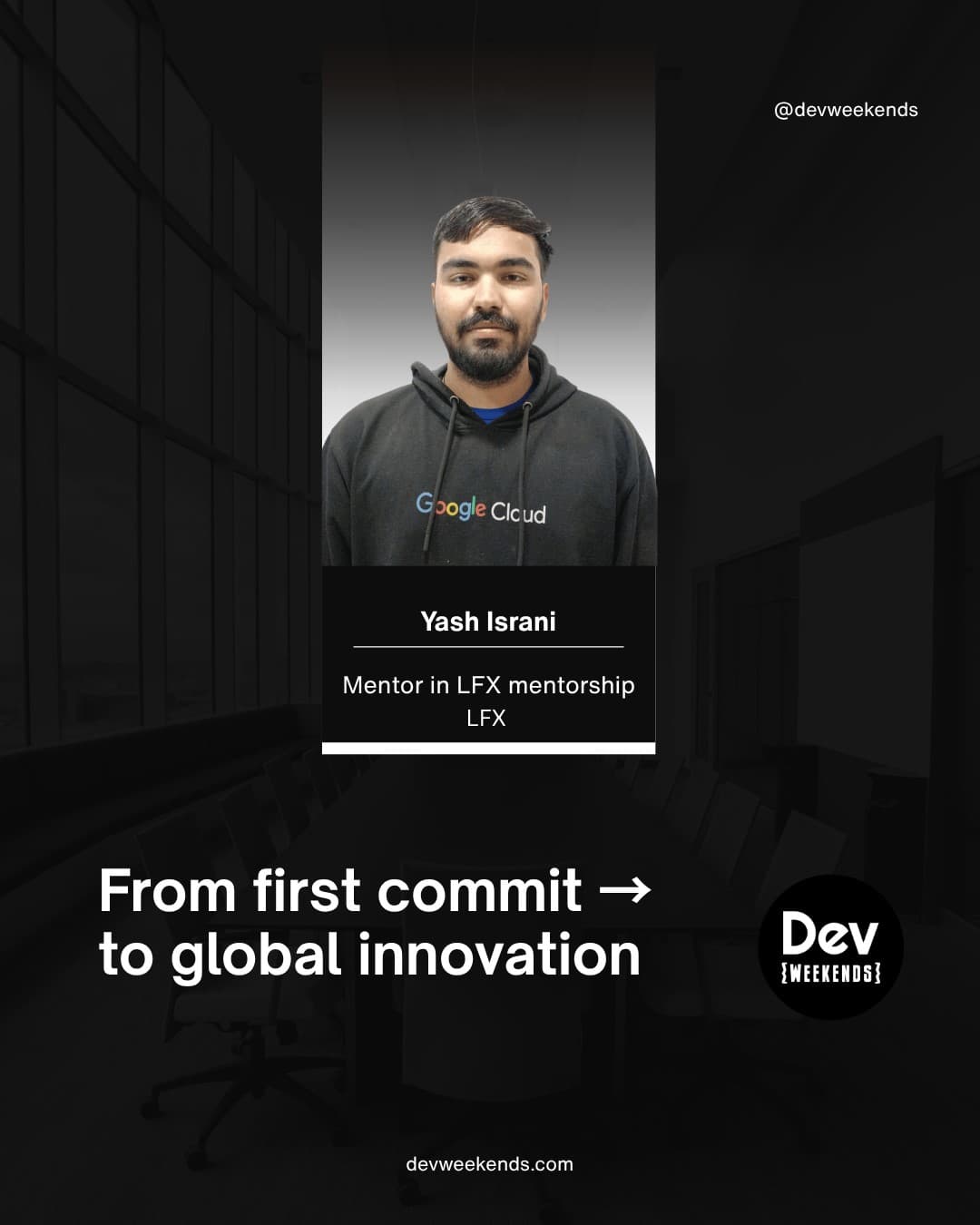
Pictured above: Yash Israni, mentor at the Linux Foundation LFX Mentorship 2026.
Yash Israni at the Linux Foundation (LFX Mentorship)
Yash joined LFX Mentorship 2026, but on the other side of the table. He is a mentor, not a mentee. That arc, from contributor to mentee to mentor, is the one Dev Weekends quietly cares about most. Mentorship page.
What the road actually looked like
If you came expecting a tidy list of life hacks, you are going to be disappointed.
The story for almost every name above is the same. They joined the Dev Weekends Fellowship at some point in the last 2 cohorts. They were placed in a small clan with 2 or 3 mentors. They picked one of 3 tracks (algorithmic, balanced engineer, or open source) and started showing up. Tuesday DSA. Thursday systems talks. Saturday or Sunday at an in-person Tech Grind, 12 hours each day, working on whatever they had committed to that weekend.
Most of them were quiet for the first month or two. A few got reviewed harshly on their first proposal and disappeared for a week before coming back. Some of the people who eventually got into GSoC had failed an internship interview the same year. The fellowship has structure, but it is not a script. It is a room of people doing real engineering, slowly, in front of each other.
The numbers, if you like numbers, look like this across recent cohorts:
- 442 projects built
- around 8,000 LeetCode problems solved across the cohort
- 904 mindset talks
- 999 spiritual and growth sessions
- 2,500 hours of recorded learning
- 800 engineers trained, of whom 74 became certified contributors, 13 took job placements, 17 took internships, 23 started freelancing, and 16 stayed active in open source
Every one of those numbers is a person making coffee at 11pm and trying again.
DSOC, and the next cohort
One thing this year made obvious is that GSoC is, by design, narrow. There is 1 summer. There are limited slots. There is no good way to onboard a complete beginner into open-source work between January and the application deadline.
So we are launching our own program.
DSOC, Dev Weekends Summer of Code, is a 3-month, paid mentorship program built for people who are not yet ready for GSoC but want to be in 12 months. There is no geographic gatekeeping and no application gauntlet. The 2026 edition runs June 1 to August 31, with a monthly stipend and a milestone review at the end of each month.
A couple of the projects already in the DSOC 2026 pipeline:
- VoiceyBill, an AI finance tracker on Gemini and UpliftAI with a MERN/TypeScript stack
- Pathment, a SaaS mentorship platform on Next.js, PostgreSQL, and Sequelize
The new Dev Weekends Fellowship cohort starts the same day. June 1.
If you read all the way down to here, the most useful thing you can do is one of the following:
- Apply to the Fellowship.
- Look at DSOC and pick a project.
- Come hang out in the Discord. Most of the conversations that turned into a GSoC selection started there.
You do not need a perfect resume to start. None of the 14 people above had one. They had time, a couple of mentors who had walked the same road 5 years earlier, and the willingness to be visibly bad at things in front of other people for a while. That is, more or less, the whole secret.
Welcome.